Notice
No guarantees offered
Results may vary
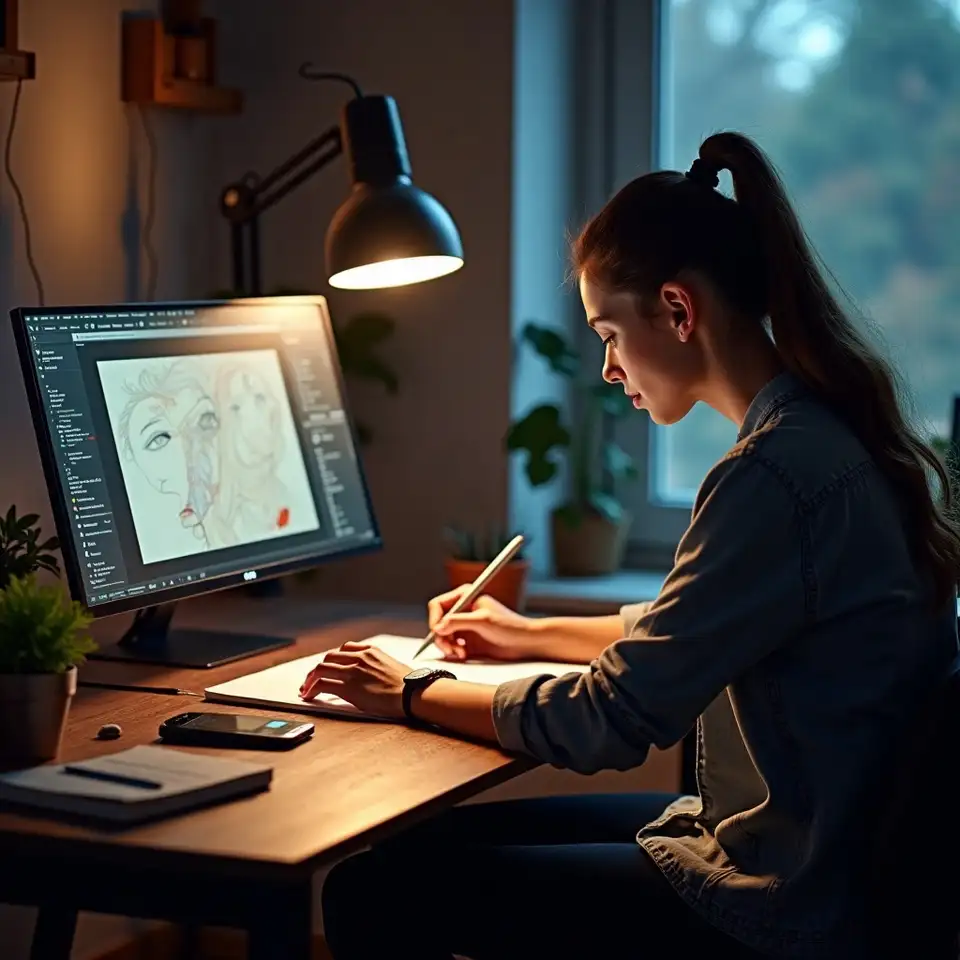
How to build a workspace that keeps you drawing, not hurting
June 21, 2026
Renee M.
Workspace
Think a fancy chair or expensive tablet will fix all your digital art problems? That’s wishful thinking. Many beginners assume the gear makes the difference, but real comfort comes from smart setup. Our team has seen artists buy the latest tablets, only to quit sessions early because of back pain or eye strain. In fact, the number-one struggle for new digital illustrators is adapting their physical space to their creative flow. For example, Erin, a recent design grad, spent weeks fighting neck aches before realizing her tablet was too flat. By propping it at a slight angle and aligning her screen at eye level, she immediately felt more relaxed and focused. If you’re frustrated by sore wrists, squinting, or endless fidgeting, you’re not alone—these issues are common, but rarely discussed. Let’s dive into workspace tweaks that actually work, starting with the basics: desk height, lighting, and tablet position.
Lighting can transform your experience. Too dim and your eyes tire quickly; too bright and glare wipes out screen details. Case in point: Jaden, a hobbyist from Montreal, struggled with headaches until he switched to indirect lamp lighting instead of overhead bulbs. Experimenting with natural daylight and screen brightness controls can also make long sessions feel much gentler. Our instructors recommend avoiding sharp light contrasts—soft, even illumination reduces strain and helps colours appear more accurate. If you notice your art looks different at night than during the day, it might be your room’s lighting, not your technique, causing the shift.
Posture is the secret ingredient for happy, productive sessions. Sitting up straight sounds obvious, but it’s easy to forget when you’re in the creative zone. We’ve watched artists curl into uncomfortable shapes for hours, only to regret it later. The fix is simple: feet flat on the floor, shoulders relaxed, and elbows at about a 90-degree angle. Take regular breaks to stretch—set a timer if you need to. One Toronto-based illustrator, Kim, swears by a five-minute walk every hour to reset and return with fresh eyes. Small habits like this build up over time, preventing burnout and repetitive strain injuries. Remember, a few minutes of adjustment can mean hours of pain-free drawing.